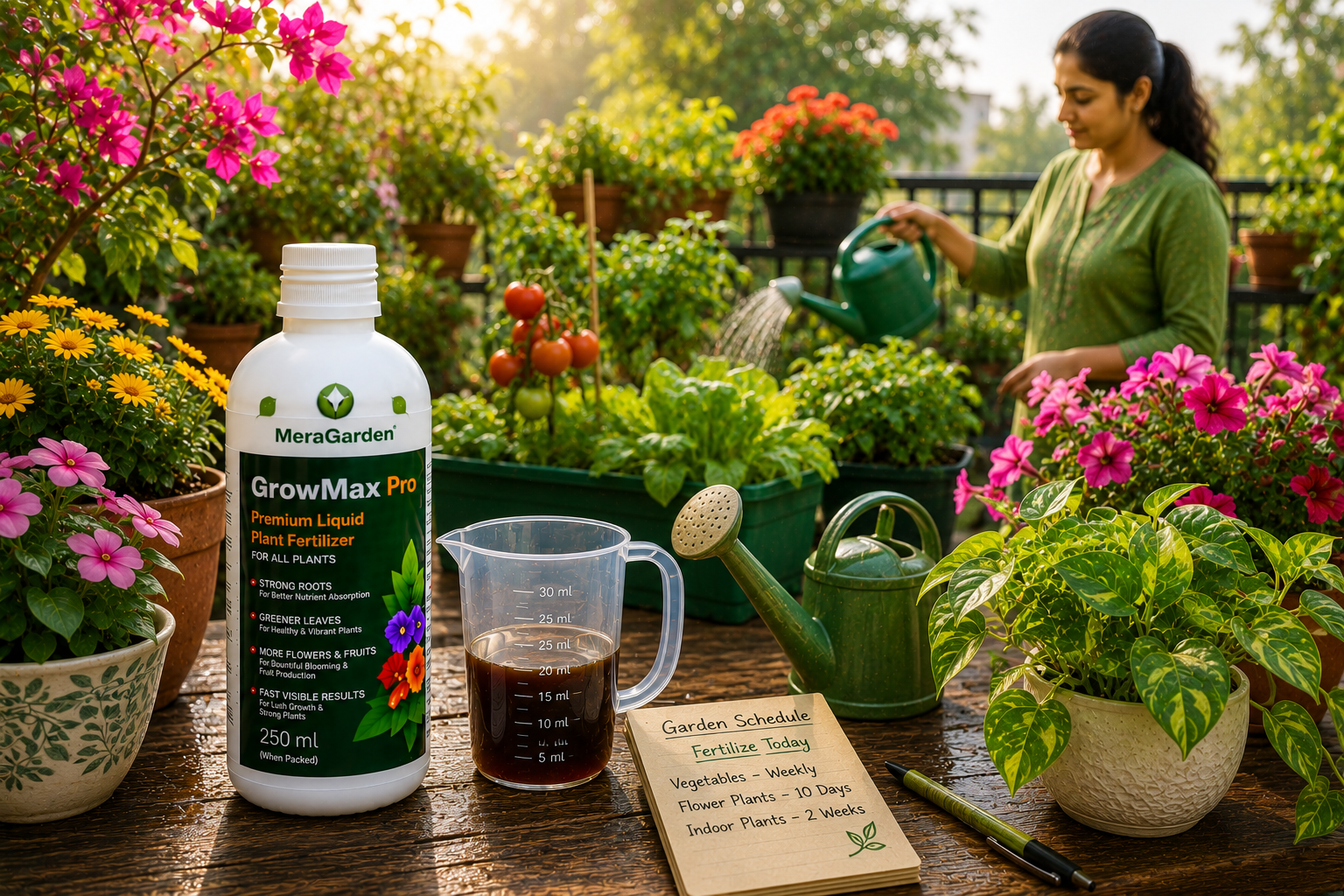
Knowing when to fertilize plants is just as important as choosing the right fertilizer.
Many home gardeners concentrate on finding the best fertilizer but overlook another important question: When should it actually be applied?
Fertilizing at the right time can make your plant-care routine more effective and easier to manage. However, applying fertilizer at the wrong time, using it too frequently, or feeding a plant that is already stressed can create unnecessary problems.
The ideal timing depends on several factors, including the type of plant, its growth stage, season, growing conditions, soil or potting mix, and the instructions provided with the fertilizer.
For example, a rapidly growing vegetable plant may have a different feeding requirement from a slow-growing indoor plant. A flowering plant may have different nutritional needs during active growth compared with a period of dormancy. Similarly, newly transplanted or severely stressed plants should not simply be given extra fertilizer because they appear weak.
For liquid fertilizers such as MeraGarden GrowMax Pro, timing should be combined with correct dilution and application frequency according to the current product instructions.
There is also a common misconception that fertilizer should always be applied whenever a plant looks unhealthy. But yellow leaves, slow growth or wilting can have many possible causes, including watering problems, poor drainage, inadequate light, pests and diseases.
Therefore, good fertilizing is not about feeding plants as often as possible.
It is about understanding when plants are actively growing, what they need, and how to provide appropriate nutrition without overdoing it.
In this guide, we will cover 7 smart tips for choosing the right time to fertilize plants, including vegetables, flowering plants and indoor plants. We will also explain the best time of day, seasonal considerations, common mistakes, liquid versus granular fertilizer and how GrowMax Pro can fit into a practical home-gardening routine.
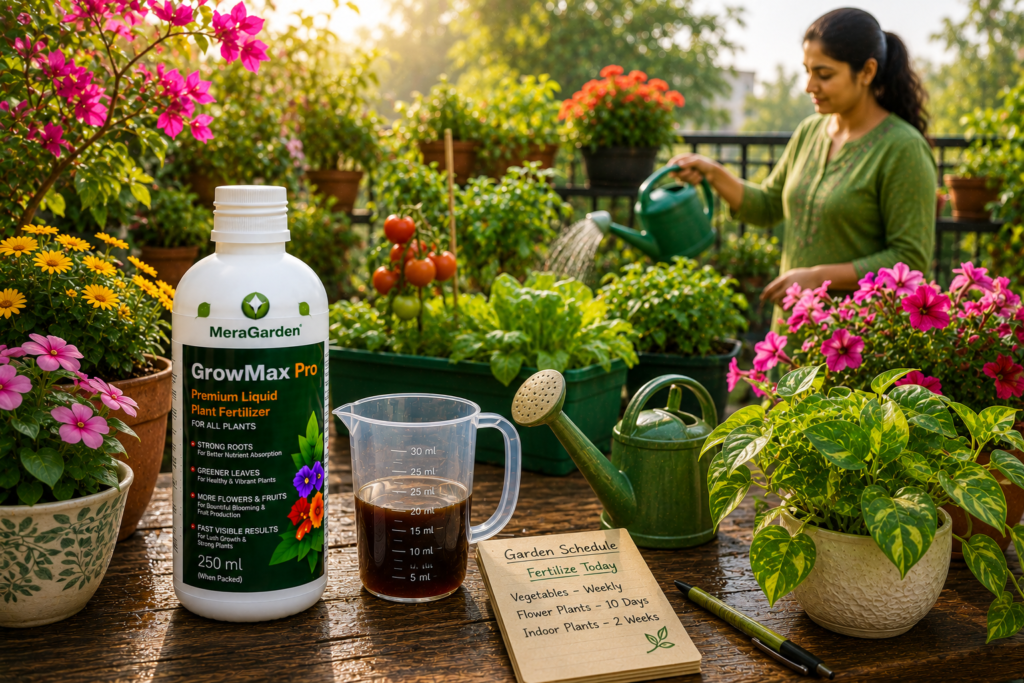
Table of Contents
Benefits 1–2: Why Fertilizing at the Right Time Matters
1. Proper Timing Supports Active Plant Growth
Plants have periods when they are actively producing new leaves, stems, roots, flowers or fruits.
These periods are generally when nutrient management becomes more important.
During active growth, plants are using resources to build new tissues and maintain normal physiological processes. Providing suitable nutrition at an appropriate time can therefore become an important part of the overall plant-care routine.
This is particularly relevant for home gardens where plants are growing in containers or limited amounts of soil.
Vegetables such as tomatoes, chillies and cucumbers can experience substantial growth during favorable conditions. Flowering plants can also have periods of active vegetative and reproductive growth.
However, fertilizer is only one part of the equation.
A plant needs appropriate:
- Light
- Water
- Growing medium
- Drainage
- Temperature
- Root conditions
- Nutrients
If these basic conditions are not suitable, simply adding more fertilizer may not solve the problem.
Look for active growth
Before fertilizing, check whether the plant is actively growing.
Signs can include:
- New leaves appearing
- New shoots developing
- Increasing plant size
- New buds
- Flower development
- Healthy new growth
Active growth does not automatically mean that fertilizer is required immediately, but it can help you understand where feeding fits into your plant-care routine.
2. Correct Timing Can Make Fertilizing More Convenient
Choosing a consistent time for fertilizer application can make gardening easier.
Instead of randomly fertilizing plants whenever you remember, you can create a simple routine based on:
Plant type → Growth stage → Product instructions → Feeding schedule
For example, you may maintain separate care routines for:
- Vegetable plants
- Flowering plants
- Indoor plants
- Balcony plants
- Container plants
A written schedule can help prevent accidental overfeeding.
This is especially useful if you have many pots.
You can record:
| Date | Plant | Fertilizer | Dilution | Notes |
|---|---|---|---|---|
| Date | Tomato | Liquid fertilizer | As label | Active growth |
| Date | Flowering plant | Liquid fertilizer | As label | Bud development |
| Date | Indoor plant | Liquid fertilizer | As label | New leaves |
The exact dosage and frequency should always come from the product instructions.
The purpose of a schedule is simply to help you remain consistent.
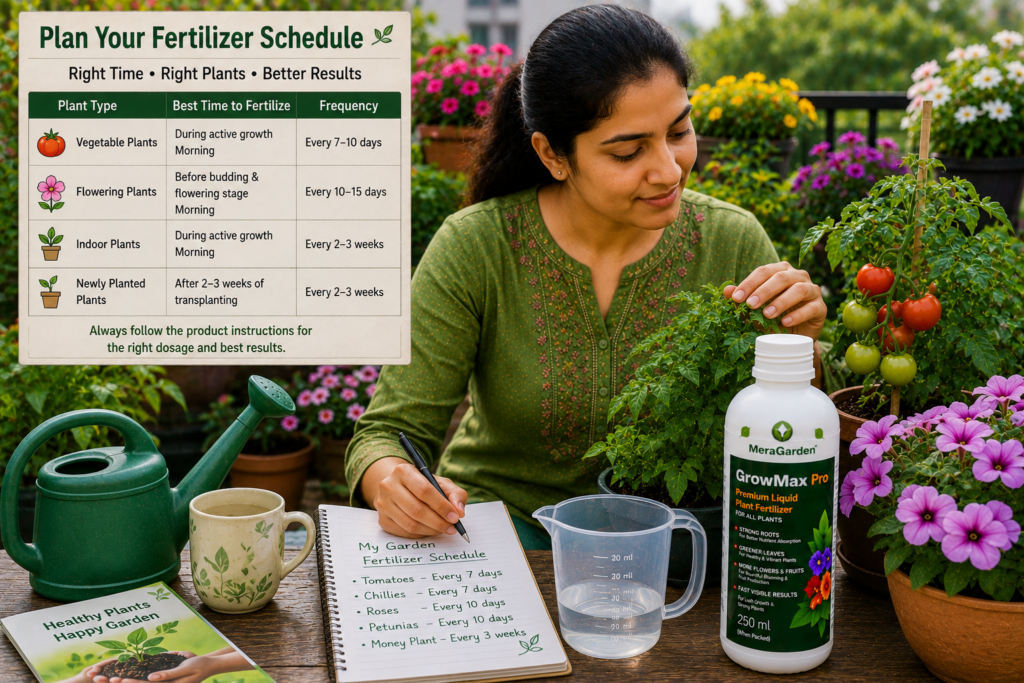
Benefits 3–5: 7 Smart Tips for Choosing the Right Fertilizing Time
3. Morning Is Often a Convenient Time for Garden Fertilizer Application
For many home-gardening routines, morning can be a practical time to care for plants.
Morning gardening allows you to inspect the plants, check soil moisture and complete fertilizer application as part of the day’s routine.
It is particularly convenient because you can observe the plants before applying anything.
However, the most important factor is not simply the clock.
You should follow the application method specified by the fertilizer manufacturer.
If the product is intended for soil application, apply it according to those directions.
If a product has specific instructions regarding foliar application, follow those instructions instead.
What should you check before applying?
Before fertilizing, check:
- Is the plant healthy enough to feed?
- Is the growing medium extremely dry?
- Is the soil waterlogged?
- Are there visible pests?
- Is the plant receiving enough light?
- Has fertilizer already been applied recently?
These checks can be more important than simply choosing a particular hour.
4. Fertilize During Active Growth Rather Than Automatically Following the Calendar
One of the biggest mistakes gardeners make is following a rigid calendar without considering plant growth.
For example:
“It is the first of the month, so every plant must be fertilized.”
That approach may not be suitable for every plant.
Plant growth changes with:
- Season
- Temperature
- Sunlight
- Water availability
- Plant maturity
- Growing medium
- Indoor or outdoor conditions
A plant growing vigorously may have different needs from one that has entered a slower growth period.
Spring and growing seasons
For many plants, active growing periods are when nutrient management becomes more relevant.
Hot weather
Very high temperatures can stress plants. Do not assume that stressed plants should automatically receive additional fertilizer.
Winter or slow-growth periods
Some plants naturally grow more slowly during cooler or lower-light periods. Their fertilizer requirements may therefore differ.
The correct schedule should be based on the plant and fertilizer instructions rather than a universal monthly rule.
5. Avoid Fertilizing Plants That Are Already Severely Stressed
This is one of the most important precautions.
A plant that is severely wilted, extremely dry, waterlogged or suffering from significant pest or disease problems may have an underlying issue that should be addressed first.
For example, if a plant is wilting because its roots are sitting in constantly wet soil, adding fertilizer is unlikely to fix the drainage problem.
Likewise, if a plant is severely dehydrated, its immediate problem may be water stress rather than a lack of nutrients.
Check the cause before feeding
Ask yourself:
Is this really a nutrition problem?
Look at:
- Soil moisture
- Drainage
- Root condition
- Sunlight
- Temperature
- Pest activity
- Disease symptoms
Only after considering these factors should you decide whether fertilizer belongs in the solution.
This simple habit can prevent one of the most common gardening mistakes: using fertilizer as a cure for every plant problem.
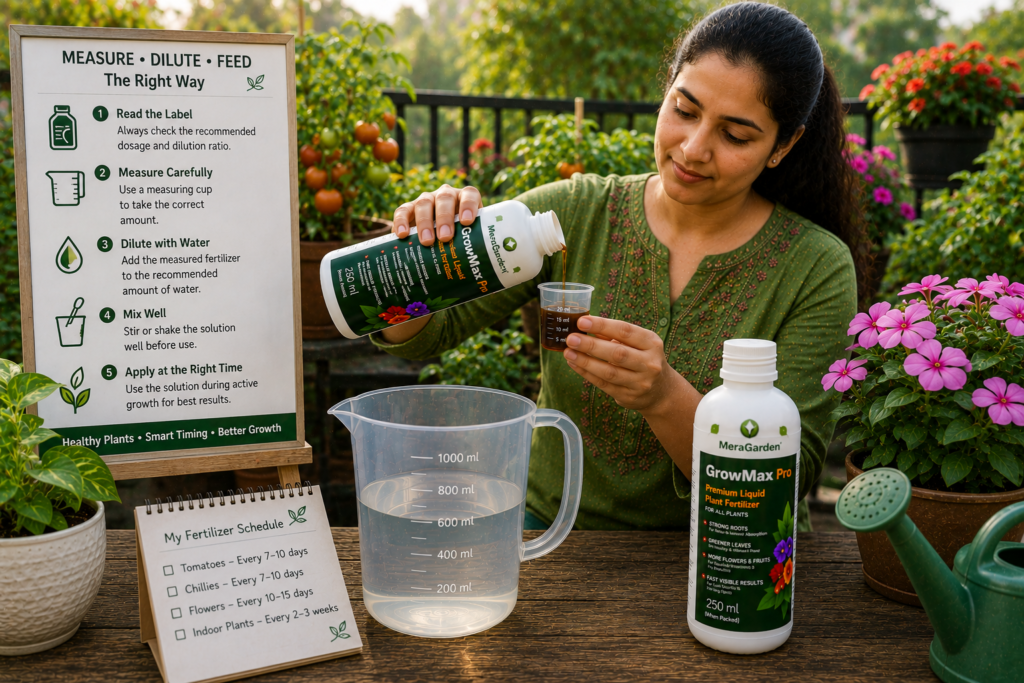
6. Watering and Fertilizing Should Work Together
Fertilizer timing should also be considered alongside watering.
This is particularly important for liquid fertilizer.
When a concentrated liquid fertilizer is diluted with water, the final solution needs to match the manufacturer’s recommended concentration.
Do not simply add extra fertilizer because the soil appears dry or because you want faster results.
Likewise, do not use a stronger concentration because you believe the plant is hungry.
What about very dry soil?
If the growing medium is extremely dry, consider the plant’s watering needs first and follow the fertilizer’s application instructions.
The correct procedure can vary by product and plant.
For this reason, the product label should take priority over generic instructions.
What about waterlogged soil?
If the growing medium remains saturated, investigate drainage and watering practices.
Fertilizer cannot replace healthy root conditions.
Good plant care works as a system:
Water + Light + Air + Roots + Growing Medium + Nutrients
All of these factors interact.
7. Follow a Consistent Fertilizer Frequency
Choosing the right time of day is useful, but frequency is equally important.
A gardener may correctly dilute fertilizer but still apply it too frequently.
For example, if the product instructions recommend periodic application, applying it every few days simply because the plants appear to be growing slowly would not be appropriate.
Similarly, skipping every scheduled application and then applying a very concentrated solution later is not a good substitute for consistent care.
Keep a simple fertilizer calendar
You can create a basic monthly record:
Week 1: Check plant condition
Week 2: Fertilize suitable plants according to label
Week 3: Monitor growth
Week 4: Review plant condition and upcoming schedule
The actual frequency should come from the fertilizer label and your plant’s requirements.
Consistency is more useful than guesswork.
Give Your Plants the Right Nutrition at the Right Time
Good fertilizer results begin with three simple habits:
Right Product + Right Dosage + Right Timing
If you are looking for a convenient liquid fertilizer option for your home garden, explore MeraGarden GrowMax Pro and follow its current product instructions for dilution and application frequency.
How to Fertilize Plants at the Right Time
Now that you understand the importance of timing, let’s look at a practical process.
Step 1: Identify the Plant
First determine what you are growing.
Is it:
- Tomato?
- Chilli?
- Cucumber?
- Leafy vegetable?
- Flowering plant?
- Indoor plant?
- Herb?
- Balcony plant?
Different plants can have different nutritional requirements.
Step 2: Check the Growth Stage
Look for active growth.
New leaves, shoots, buds and developing flowers can indicate that the plant is actively growing.
However, do not use visual growth alone to determine fertilizer dosage.
Step 3: Check the Plant’s Health
Before fertilizing, inspect the plant.
Look for:
- Wilting
- Yellowing
- Brown leaf edges
- Pest damage
- Disease symptoms
- Poor drainage
- Extremely dry soil
If the plant is suffering from an environmental problem, correct that problem first where appropriate.
Step 4: Check the Product Instructions
Read the current MeraGarden GrowMax Pro label before preparing the solution.
Confirm:
- Recommended dosage
- Dilution ratio
- Suitable plants
- Application frequency
- Application method
Do not use the dosage from another fertilizer.
Step 5: Measure the Fertilizer
Use a suitable measuring container.
Do not estimate the quantity by eye.
Accurate measurement helps maintain a consistent fertilizer concentration.
Step 6: Dilute Correctly
Add the measured fertilizer to the recommended amount of water.
Mix thoroughly.
Never deliberately make the solution stronger than the manufacturer’s recommended concentration.
Step 7: Apply at the Recommended Frequency
Apply according to the product instructions.
For soil application, distribute the diluted solution appropriately around the plant’s growing area according to the label.
Step 8: Monitor the Plants
After application, observe the plants over time.
Look for:
- New growth
- Healthy leaves
- Flower development
- Vegetable development
- Overall plant vigor
- Signs of stress
Do not immediately increase the fertilizer amount if growth does not change quickly.
Liquid Fertilizer vs Granular Fertilizer: Which Is Better for Timing?
Both liquid and granular fertilizers can be useful, but they are applied differently.
| Feature | Liquid Fertilizer | Granular Fertilizer |
|---|---|---|
| Form | Liquid | Dry granules |
| Preparation | Often diluted with water | Usually applied dry as directed |
| Measurement | Measured before dilution | Measured before application |
| Timing | Can fit scheduled feeding routines | Can fit scheduled soil applications |
| Application | Often convenient for containers | Convenient for soil applications |
| Dosage control | Depends on accurate dilution | Depends on accurate application |
| Indoor plants | Convenient when product is suitable | Can require careful placement |
| Vegetable plants | Suitable formulations available | Suitable formulations available |
| Flowering plants | Suitable formulations available | Suitable formulations available |
| Main risk | Over-concentration if incorrectly diluted | Over-application if excessive amounts are used |
The question should not simply be:
“Which fertilizer is better?”
Instead ask:
“Which fertilizer format is appropriate for my plants and easier for me to use correctly?”
For some home gardeners, liquid fertilizer is convenient because it can be measured and diluted before application.
For others, granular fertilizer may fit their gardening routine better.
The most important factor is correct application.
MeraGarden GrowMax Pro: A Convenient Option for Your Fertilizer Routine
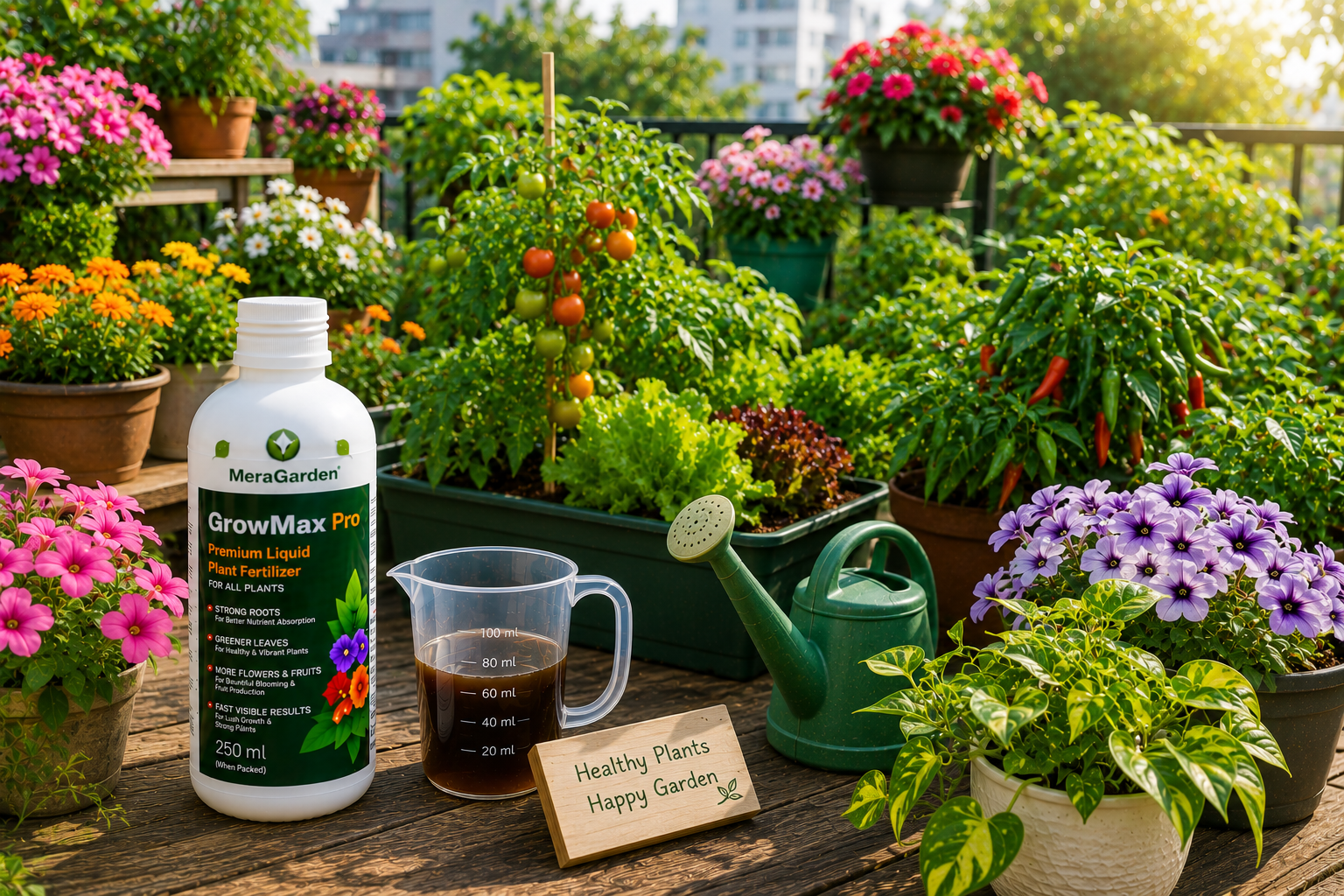
For gardeners who prefer liquid fertilizer, MeraGarden GrowMax Pro can be incorporated into a regular home-garden nutrition routine according to the current product instructions.
Its liquid format can make it convenient to measure and dilute before application.
It may be useful in a mixed home garden containing:
- Vegetable plants
- Flowering plants
- Potted plants
- Balcony plants
- Terrace plants
- Indoor plants
However, gardeners should avoid treating every plant exactly the same.
Follow the label
Before applying GrowMax Pro, check the current product label for the recommended:
Dosage → Dilution → Frequency → Application method
This is particularly important because fertilizer concentrations can vary between products.
Timing + dosage go together
Even if you choose an appropriate time to fertilize, using an incorrect concentration can still create problems.
Think of fertilizer application as four connected decisions:
1. What?
Choose a fertilizer suitable for the plant.
2. When?
Apply according to the recommended schedule and plant growth conditions.
3. How much?
Measure the recommended amount.
4. How?
Dilute and apply according to the product instructions.
This approach is much more reliable than simply fertilizing whenever the plant appears weak.
Build a Smarter Fertilizer Routine
Want to make your home-garden feeding routine simpler?
Choose a suitable fertilizer, measure it accurately and apply it according to the recommended schedule.
MeraGarden GrowMax Pro is a convenient liquid fertilizer option for gardeners who prefer a measurable, dilutable fertilizer format.
Conclusion
So, when is the best time to fertilize plants?
There is no single universal day or hour that is perfect for every plant.
The best time depends on the plant, growth stage, season, growing conditions and fertilizer instructions.
For many home-gardening routines, morning can be a convenient time to inspect plants and complete fertilizer applications, but the bigger priority is following the correct application method and schedule.
Remember these 7 smart tips:
- Fertilize during appropriate active-growth periods.
- Create a consistent fertilizer routine.
- Morning can be a convenient time for many applications.
- Consider seasonal and growth-stage changes.
- Do not use fertilizer as a cure for every plant problem.
- Use correct dilution and consider watering conditions.
- Follow the recommended fertilizer frequency.
The biggest mistake is assuming that more fertilizer or more frequent applications will automatically produce healthier plants.
Good plant nutrition is about balance and consistency.
If you are using MeraGarden GrowMax Pro, measure and dilute it according to the current product label and use it as part of a broader plant-care routine.
Give your plants suitable light, proper watering, good drainage and healthy growing conditions alongside appropriate nutrition.
The smartest gardening routine is not simply fertilizing more—it is fertilizing at the right time, in the right amount and for the right plant.
FAQs
1. When is the best time to fertilize plants?
The best time depends on the plant, growth stage, season and fertilizer instructions. Fertilizing during appropriate active growth periods is generally more relevant than following a fixed calendar for every plant.
2. Is morning a good time to fertilize plants?
Morning can be a convenient time for many home-gardening activities because you can inspect the plant and its growing conditions before application. Always follow the product’s specific application instructions.
3. Should I fertilize plants every week?
Not necessarily. Fertilizer frequency depends on the specific product, plant and growing conditions. Follow the manufacturer’s recommended schedule.
4. Should I fertilize a plant that is wilting?
First determine why the plant is wilting. Water stress, poor drainage, root problems, heat and pests can all cause wilting. Do not automatically assume that fertilizer is needed.
5. Is it better to fertilize plants before or after watering?
The correct procedure depends on the fertilizer and its application instructions. Follow the product label rather than assuming that one method works for every fertilizer.
6. What is the best time to fertilize vegetable plants?
Vegetable plants generally benefit from appropriate nutrition during suitable growth periods, but the exact schedule depends on the vegetable, growth stage, growing conditions and fertilizer formulation.
7. When should flowering plants be fertilized?
Flowering plants should be fertilized according to their growth stage and the fertilizer manufacturer’s instructions. Flowering also depends on adequate light, watering and overall plant health.
8. Can I fertilize indoor plants at any time?
Indoor plants should be fertilized according to their growth activity, environmental conditions and product instructions. Avoid automatically applying fertilizer simply because a particular date has arrived.
9. Should I fertilize plants during winter?
Some plants naturally slow their growth during cooler or lower-light periods. Their fertilizer needs may therefore change. Follow the requirements of the specific plant and fertilizer.
10. Can I use MeraGarden GrowMax Pro in the morning?
If GrowMax Pro’s current product instructions permit the application, morning can be a convenient time to incorporate it into your gardening routine. Always follow the current label for dosage, dilution and frequency.
11. Does fertilizing more often make plants grow faster?
Not necessarily. Excessive fertilizer can stress plants. Correct dosage and frequency are more important than simply increasing the number of applications.
12. How do I know if my plant needs fertilizer?
Look at the overall plant condition and growing environment. Slow growth or leaf discoloration can have multiple causes, so check light, watering, drainage, pests and other factors before assuming that fertilizer is required.
You Must Read
- How Often Should You Fertilize Plants? 7 Easy Rules for Healthy Growth
- How Often Should You Fertilize Plants? Complete Fertilizer Schedule
- What Is NPK Fertilizer? 7 Easy Tips for Healthy Plants
- Best Liquid Fertilizer for Plants: Complete Guide for Home Gardeners
- How to Use Liquid Fertilizer for Plants: 7 Easy Steps for Better Growth
- Best Organic Fertilizers for Plants: 7 Natural Options for Healthy Growth
- Best Fertilizer for Indoor Plants in India: 7 Easy Tips for Healthy Growth
- Best Fertilizer for Flowering Plants in India: 7 Top Options
- Best Fertilizer for Plants: 7 Smart Tips to Avoid Common Mistakes
- 5 Signs Your Plants May Need Fertilizer
- How Much Liquid Fertilizer Should You Use for Plants?
- 7 Benefits of Liquid Fertilizer for Plants: Grow Healthier Plants Faster
- 7 Benefits of Liquid Fertilizer for Plants: A Simple Guide for Healthy Growth
- Best Fertilizer for Peace Lily: 7 Powerful Tips for Beautiful Blooms and Avoiding Common Mistakes
- Best Fertilizer for Spider Plant: 7 Powerful Tips for Lush Growth and Avoiding Common Mistakes
- Liquid Fertilizer vs Granular Fertilizer: Which Is Better? 7 Key Differences for Home Gardeners
- Liquid Fertilizer vs Organic Fertilizer: 7 Powerful Pros, Cons & the Best Choice for Your Plants
- How to Choose the Right Fertilizer for Your Plants: 7 Smart Tips to Avoid Common Mistakes
- 5 Positive Signs Your Plants Need Fertilizer — Avoid These Warning Symptoms for Healthier Growth
- How to Grow Peace Lilies
- How To Grow Houseplants