
Knowing how often should you fertilize plants is just as important as choosing the right fertilizer.
Many gardeners make one of two common mistakes. They either don’t provide enough nutrients when plants are actively growing, or they apply fertilizer too frequently because they believe more fertilizer will produce faster growth.
In reality, plants have different nutritional requirements depending on their type, growth stage, growing conditions, soil, and the fertilizer being used.
A good fertilizer routine should provide appropriate nutrition without unnecessarily overfeeding the plant.
In this guide, we’ll explain how often to fertilize plants, how often to use liquid fertilizer, the difference between indoor and outdoor plant feeding, and the signs that your plants may be receiving too much fertilizer.
Table of Contents
How Often Should You Fertilize Plants?
There is no single fertilizer schedule that works for every plant.
As a general starting point, many actively growing plants can be fed every 2–4 weeks when using a properly diluted liquid fertilizer. However, the correct frequency depends on the fertilizer formulation and the needs of the particular plant.
Some plants require frequent feeding, while slow-growing plants may need much less.
Before deciding how often to fertilize, consider:
- Plant species
- Growing season
- Growth rate
- Soil or potting mix
- Pot size
- Amount of sunlight
- Fertilizer concentration
- Plant age
- Overall plant health
Always follow the application instructions on your fertilizer label.
What Determines Fertilizer Frequency?
Plant Type
Different plants have different nutrient requirements.
A rapidly growing vegetable plant may need a different feeding schedule from a slow-growing snake plant.
Similarly, flowering plants can have different requirements from foliage plants.
This is why it is better to create a fertilizer routine based on the plant rather than using the exact same schedule for every plant.
Growing Season
Plants generally require more nutrition when they are actively producing:
- New leaves
- New shoots
- Flowers
- Fruits
- Roots
During periods of slow growth or dormancy, many plants need less fertilizer.
For outdoor plants, seasonal changes can have a major impact.
Indoor plants may continue growing for longer periods when they receive suitable light and temperature.
Fertilizer Type
The fertilizer itself also determines how frequently it should be applied.
Liquid, granular, slow-release and other fertilizer formulations can have different application instructions.
For example, a concentrated liquid fertilizer may need to be diluted before use.
Never assume that the dosage or frequency of one fertilizer can be applied to another product.
7 Rules for Creating a Plant Fertilizer Schedule
1. Fertilize During Active Growth
When a plant is actively growing, it is using nutrients to produce new plant tissue.
This can be an appropriate time for regular feeding.
Look for signs such as:
- New leaves
- New stems
- Fresh shoots
- Flower development
- Fruit development
If the plant is actively growing and the fertilizer is suitable for that plant, follow the recommended feeding schedule.
2. Don’t Fertilize Just Because a Plant Looks Weak
A weak or yellowing plant does not automatically need fertilizer.
The problem could be caused by:
- Too much water
- Too little water
- Insufficient light
- Poor drainage
- Root damage
- Pests
- Temperature stress
- Nutrient imbalance
Adding fertilizer without identifying the problem can sometimes make the situation worse.
First check the basic growing conditions.
3. Follow the Recommended Dosage
The concentration of fertilizers varies considerably.
If a product label gives a specific dilution rate, measure the fertilizer carefully.
For liquid fertilizers, don’t make the solution stronger because you want faster growth.
A stronger solution is not necessarily better for your plants.
4. Give Your Plant Time Between Applications
Plants don’t necessarily need fertilizer every time they receive water.
If your fertilizer is intended for periodic feeding, allow the recommended interval between applications.
For many general liquid fertilizers, this may be several weeks during active growth, but the product label should always take priority.
5. Adjust According to the Plant
A fertilizer schedule for tomatoes may not be suitable for a snake plant.
Vegetables, flowering plants, indoor foliage plants and ornamental plants can have different requirements.
Create separate feeding routines when necessary.
6. Reduce Feeding When Growth Slows
If a plant enters a period of slow growth, its fertilizer requirements may decrease.
Avoid maintaining a heavy feeding schedule simply because you used the same schedule during active growth.
Observe the plant and adjust accordingly.
7. Monitor Your Plant After Fertilizing
After applying fertilizer, watch the plant’s response.
Healthy growth may include:
- New leaves
- Strong stems
- Healthy foliage
- New shoots
- Flowers or fruit when appropriate
If you notice brown leaf tips, leaf-edge burn or other signs of fertilizer stress, reassess your feeding routine.
How Often Should You Use Liquid Fertilizer?
Liquid fertilizer can be convenient because it is generally mixed with water before application.
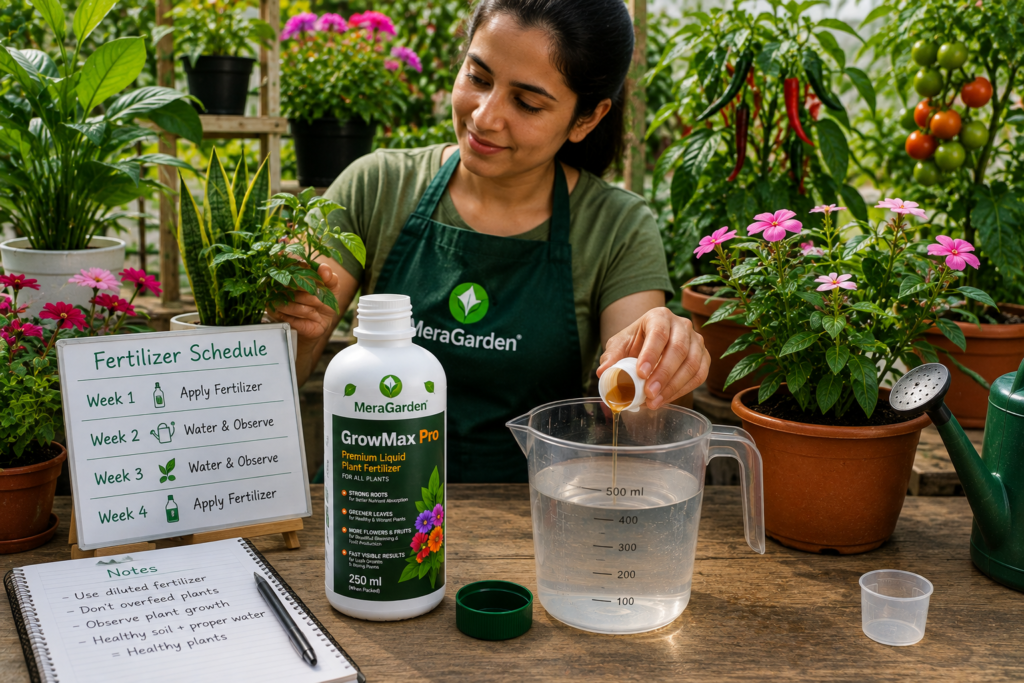
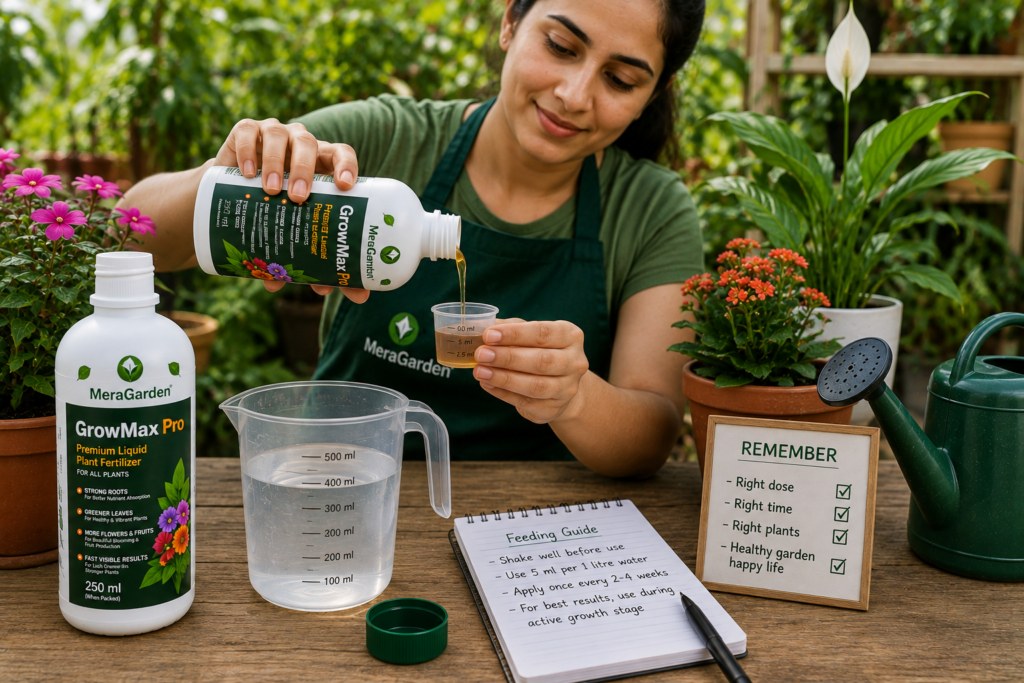
For many actively growing plants, a diluted liquid fertilizer may be applied approximately every 2–4 weeks, depending on the product and plant.
However, this is only a general range.
Your actual schedule should be based on:
- Product instructions
- Plant type
- Growth stage
- Growing conditions
- Soil or potting mix
Example schedule
Week 1: Apply fertilizer according to the label.
Week 2: Normal plant care and observation.
Week 3: Continue normal watering.
Week 4: Apply fertilizer again if appropriate.
This example should not replace the instructions provided with your specific fertilizer.
How Often Should You Fertilize Indoor Plants?
Indoor plants usually grow in containers containing a relatively limited amount of growing medium.
Nutrients can therefore become depleted over time.
For actively growing indoor plants, periodic feeding can be useful.
A diluted liquid fertilizer may be applied every few weeks when appropriate, but the frequency depends on the product and plant.
Examples of popular indoor plants include:
- Money plant
- Peace lily
- Snake plant
- Spider plant
- Philodendron
- ZZ plant
- Areca palm
Fast-growing plants may require more regular feeding than slow-growing plants.
How Often Should You Fertilize Flowering Plants?
Flowering plants can have increased nutritional requirements during active growth and flowering.
However, flowers depend on more than fertilizer.
Other important factors include:
- Light
- Watering
- Temperature
- Pruning
- Plant variety
- Pot size
- Soil quality
Don’t increase fertilizer concentration simply because you want more flowers.
Use an appropriate fertilizer according to the label.
How Often Should You Fertilize Vegetable Plants?
Vegetable plants can have changing nutritional requirements during their growth cycle.
Tomatoes, chillies, cucumbers and leafy vegetables may not all require exactly the same feeding routine.
Factors include:
- Plant age
- Vegetative growth
- Flowering
- Fruit development
- Soil fertility
- Container size
Container-grown vegetables may need particularly careful nutrient management because they have a limited amount of growing medium.
Help Your Plants Get Regular Nutrition
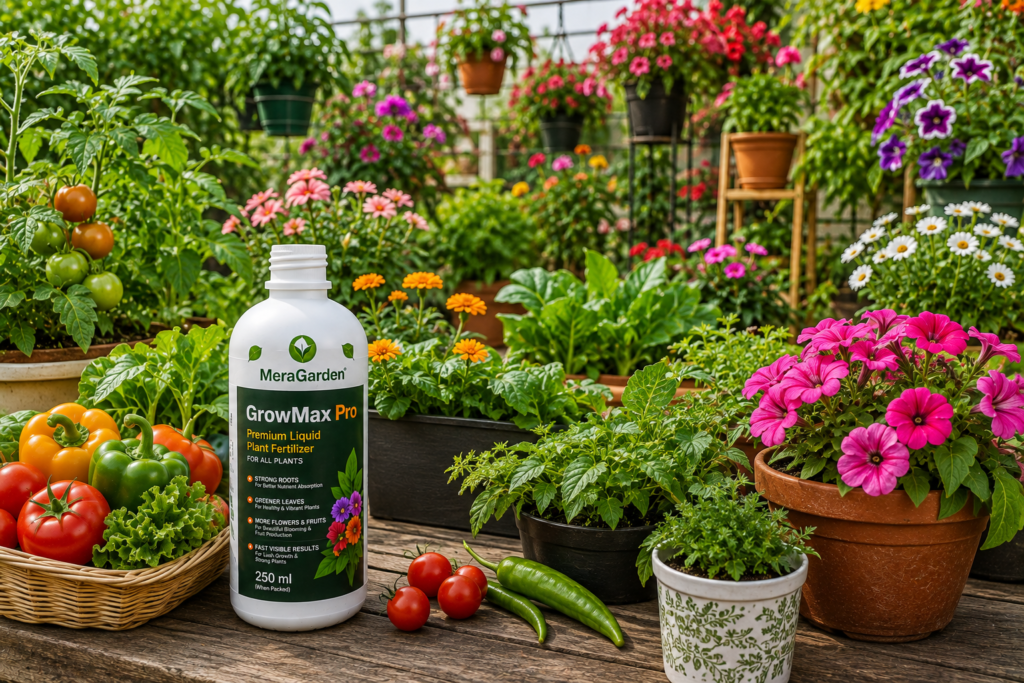
If you’re looking for a convenient liquid fertilizer for your home garden, explore MeraGarden GrowMax Pro and follow the product’s recommended dosage and application instructions.
How Often Should You Fertilize Plants in Pots?
Potted plants require special attention because the amount of soil available to their roots is limited.
Nutrients can be lost through watering, while repeated fertilizer applications can also result in nutrient or salt accumulation.
For this reason:
- Don’t overfertilize.
- Use the recommended dilution.
- Maintain proper drainage.
- Monitor plant growth.
- Repot when necessary.
- Adjust feeding according to plant requirements.
This is particularly important for balcony gardens, terrace gardens and indoor plants.
Signs You Are Fertilizing Too Much
Overfertilization can create problems.
Possible signs include:
Brown Leaf Tips
The tips of leaves may become brown or dry.
Scorched Leaf Edges
Leaves may develop brown or damaged edges.
White Buildup on Soil
A crusty white buildup can sometimes indicate salt accumulation.
Poor Growth
Excess fertilizer can stress plants instead of promoting better growth.
Wilting
Root stress can sometimes result in wilting even when the soil contains adequate moisture.
If you suspect overfertilization, stop adding more fertilizer and assess the plant’s growing conditions.
Signs Your Plant May Need Nutrients
Possible nutrient-related symptoms can include:
- Pale foliage
- Yellowing leaves
- Slow growth
- Small new leaves
- Poor flowering
- Weak overall growth
But these symptoms can also be caused by watering problems, insufficient light, pests or root damage.
Therefore, don’t diagnose nutrient deficiency based on one symptom alone.
Best Time to Fertilize Plants
The best time depends on the plant, weather and fertilizer instructions.
For outdoor plants, avoid creating additional stress by fertilizing during extremely hot or unsuitable conditions.
For indoor plants, normal room conditions may allow plants to continue growing for much of the year.
The most important thing is to apply fertilizer according to the product directions and the plant’s growth stage.
Common Fertilizing Mistakes
Using Too Much
More fertilizer does not equal faster growth.
Fertilizing Every Time You Water
Unless specifically recommended by the product, feeding every time you water can be excessive.
Ignoring the Plant’s Growth Stage
A dormant or slow-growing plant may not need the same feeding frequency as an actively growing plant.
Using the Wrong Fertilizer
Different plants can have different nutritional requirements.
Ignoring Other Plant Problems
Fertilizer cannot fix poor light, root rot, pests or incorrect watering.
GrowMax Pro for Regular Plant Feeding
For gardeners who prefer liquid plant nutrition, MeraGarden GrowMax Pro can be incorporated into a regular plant-care routine according to its product instructions.
A good fertilizer routine should focus on correct dosage and appropriate frequency, rather than simply using more product.
Before using GrowMax Pro:
- Read the product instructions.
- Measure the recommended amount.
- Dilute as directed.
- Apply to suitable plants.
- Avoid unnecessary overfeeding.
- Observe your plants after application.
This approach helps keep fertilizer application controlled and consistent.
Make Plant Feeding Simple
Want a convenient liquid fertilizer for your garden plants?
Frequently Asked Questions
How often should you fertilize plants?
Many actively growing plants can be fertilized every 2–4 weeks with an appropriately diluted liquid fertilizer, but the correct frequency depends on the plant and product instructions.
Can I fertilize plants every week?
Only if the fertilizer specifically recommends weekly application at the appropriate dilution. Otherwise, weekly feeding may be unnecessary or excessive.
How often should I fertilize indoor plants?
Actively growing indoor plants may benefit from periodic feeding, often every few weeks depending on the plant and fertilizer. Always follow the product instructions.
How often should I fertilize flowering plants?
Flowering plants can benefit from appropriate feeding during active growth, but the exact frequency depends on the plant and fertilizer formulation.
Can too much fertilizer damage plants?
Yes. Excess fertilizer can contribute to salt buildup and root stress and may cause brown leaf tips, scorched edges and poor growth.
Should I fertilize a sick plant?
Not automatically. First determine whether the problem is caused by watering, light, pests, drainage, roots or another factor.
Support Healthy Plant Growth
Give your plants the right care, the right amount of water, and appropriate nutrition.
Final Thoughts
So, how often should you fertilize plants?
The answer depends on the plant, fertilizer, growing conditions and growth stage.
For many actively growing plants, feeding every 2–4 weeks with an appropriately diluted liquid fertilizer can be a useful general starting point. However, always follow the specific instructions on your fertilizer label.
Remember these simple rules:
- Fertilize actively growing plants appropriately.
- Follow the product dosage.
- Don’t automatically fertilize every time you water.
- Reduce feeding when plant growth slows.
- Monitor plants for signs of overfertilization.
- Don’t use fertilizer as a solution for unrelated plant problems.
- Maintain proper light, watering, soil and drainage.
A consistent and measured fertilizer routine can become an important part of good plant care.
MeraGarden GrowMax Pro can be included in that routine according to its product directions.