
Liquid fertilizer can be a convenient way to provide nutrients to plants, especially when you want an easy feeding routine for potted plants, flowering plants, vegetables, and indoor greenery.
But using more fertilizer does not automatically mean faster growth. The result depends on choosing a suitable product, following its label directions, using the correct dilution, and applying it at the right time.
In this guide, you will learn how to use liquid fertilizer for plants step by step, how often to apply it, which plants can benefit, common mistakes to avoid, and how to make liquid fertilizer part of a practical plant-care routine.
Table of Contents
What Is Liquid Fertilizer?
Liquid fertilizer is a plant nutrient product supplied in liquid form. Depending on the formulation, it may contain nutrients such as nitrogen, phosphorus, potassium and other essential plant nutrients.
Liquid fertilizers are commonly diluted with water before application. This makes them convenient for home gardeners who want a simple way to provide nutrients during the growing season.
However, different fertilizers have different concentrations, nutrient ratios and recommended application schedules.
Therefore, always follow the instructions provided with the particular fertilizer you are using.
Why Do Plants Need Fertilizer?
Plants require nutrients for healthy roots, leaves, flowers and overall development.
The three primary nutrients commonly associated with plant fertilizers are:
- Nitrogen (N): Supports leafy and vegetative growth.
- Phosphorus (P): Plays an important role in root development and reproductive growth.
- Potassium (K): Supports several plant functions and overall plant strength.
Plants may also require secondary nutrients and micronutrients such as calcium, magnesium, sulfur, iron, zinc, manganese and boron.
The goal should not be to use the strongest fertilizer available. Instead, gardeners should use a suitable fertilizer at an appropriate rate.
ICAR has recently emphasized balanced, soil-test-based and integrated nutrient management rather than indiscriminate fertilizer use.
7 Steps: How to Use Liquid Fertilizer for Plants
Step 1: Identify Your Plant and Its Needs
Before applying fertilizer, first identify the plant you are growing.
Flowering plants such as roses, hibiscus, marigold, jasmine and bougainvillea may have different nutritional needs from indoor foliage plants.
Vegetables such as tomatoes, chillies and brinjal may also require a different feeding routine depending on their growth stage.
Before fertilizing, consider:
- Plant type
- Growth stage
- Pot size
- Potting mix
- Recent repotting
- Current plant health
- Season
- Sunlight and growing conditions
If a plant is severely wilted, diseased or suffering from root problems, fertilizer may not be the solution to the underlying problem.
Step 2: Read the Fertilizer Label Carefully
Always read the fertilizer label before mixing or applying it.
Look for:
- Recommended dilution
- Application frequency
- Suitable plants
- Application method
- Storage instructions
- Safety precautions
- Whether it is intended for soil application or foliar application
Do not assume that two liquid fertilizers require the same dosage.
A concentrated fertilizer can have a completely different dilution requirement from another product.
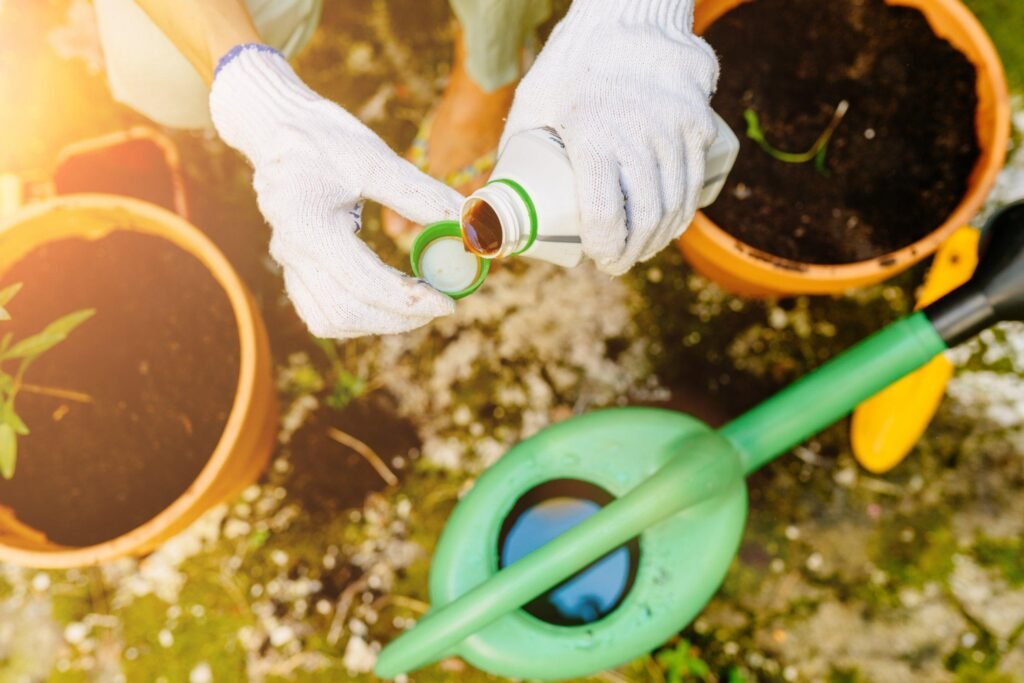
Step 3: Measure the Correct Quantity
Correct measurement is one of the most important parts of using liquid fertilizer.
Using too little may provide limited nutritional benefit, while using too much can stress plants and contribute to nutrient or salt-related problems in the growing medium.
Use an appropriate measuring cap, cup, syringe or other measuring tool according to the manufacturer’s instructions.
Never increase the concentration simply because you want faster plant growth.
For MeraGarden GrowMax Pro, gardeners should follow the dosage and application instructions provided with the product.
Step 4: Dilute the Fertilizer Correctly
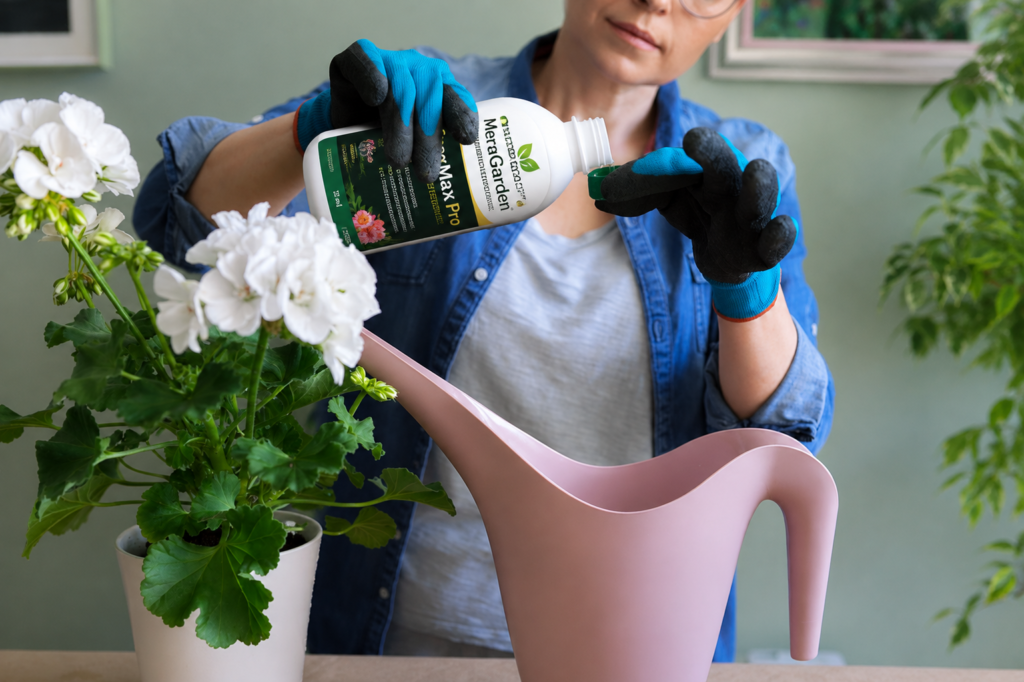
If your liquid fertilizer is a concentrate, dilute it with the recommended quantity of water.
A simple process is:
- Add the recommended amount of water to a clean container.
- Measure the required quantity of fertilizer.
- Add the fertilizer to the water.
- Mix thoroughly.
- Apply according to the product instructions.
Do not make the solution stronger than recommended.
A stronger fertilizer solution does not automatically produce healthier plants.
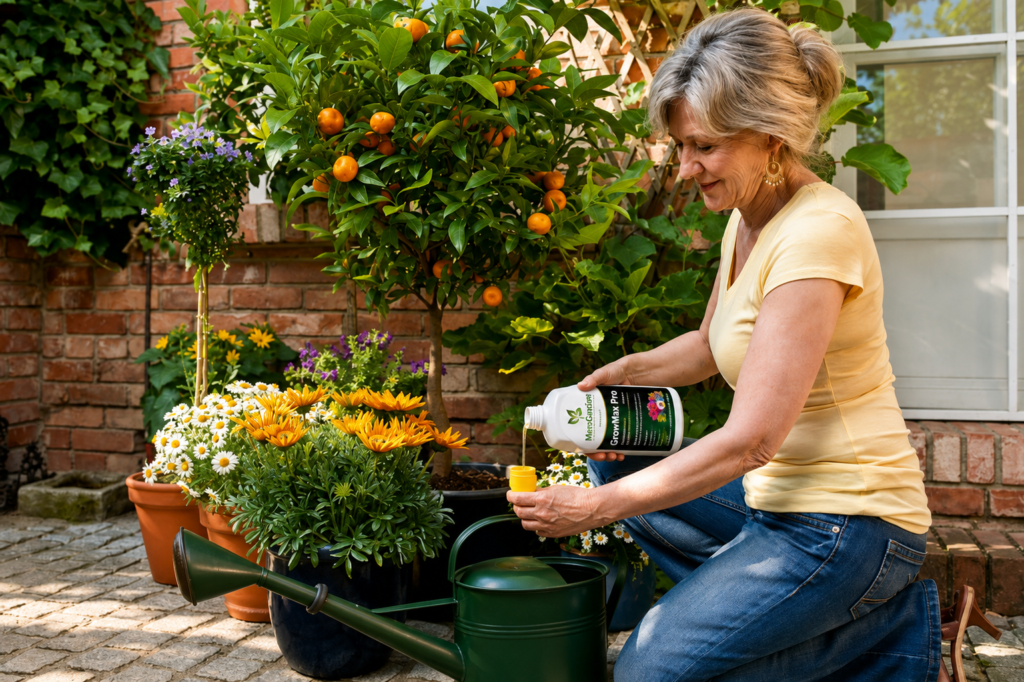
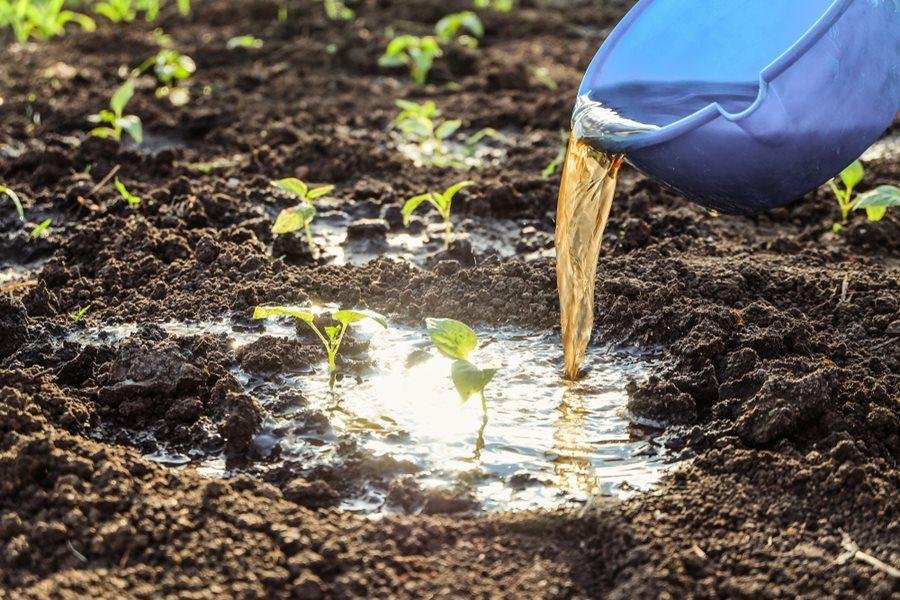
Step 5: Apply Around the Root Zone
For soil application, distribute the diluted fertilizer around the plant’s root zone rather than pouring concentrated fertilizer directly against the stem.
For potted plants, apply the solution evenly over the growing medium according to the recommended quantity.
The objective is to make nutrients available to the roots while avoiding unnecessary stress to the plant.
If a product is specifically approved for foliar application, follow its instructions carefully.

Step 6: Choose the Right Time to Fertilize
The timing of fertilizer application can influence how plants respond.
For many plants, feeding during active growth is more appropriate than feeding a dormant or severely stressed plant.
Depending on the plant, suitable periods may include:
- Active vegetative growth
- Flowering preparation
- Flowering
- Fruit development
- Healthy new growth
However, there is no universal fertilizer calendar for every plant.
Indian gardeners should also consider local weather conditions. Extreme heat, heavy rainfall and waterlogged soil can affect plant health and nutrient management.
Step 7: Observe the Plant After Feeding
After applying fertilizer, observe the plant rather than repeatedly adding more fertilizer.
Look for:
- New leaf growth
- Healthy foliage
- Flower development
- Overall plant vigor
- Changes in leaf color
- Signs of stress
If a plant develops unusual symptoms after fertilization, stop increasing the fertilizer dose and review the application instructions.
Healthy plant growth depends on several factors, including light, water, drainage, temperature, roots, soil and nutrition.
How Often Should You Use Liquid Fertilizer?
There is no single frequency that works for every fertilizer and every plant.
The correct schedule depends on:
- Fertilizer concentration
- Plant species
- Growth stage
- Potting medium
- Season
- Growing conditions
- Manufacturer’s instructions
Some fertilizers may be designed for frequent application at a lower dilution, while others may be applied less frequently.
Always follow the product label instead of creating an aggressive feeding schedule.
Best Time to Apply Liquid Fertilizer
For many home gardeners, fertilizing during active growth can be more useful than feeding a dormant plant.
However, the ideal timing depends on the plant species and fertilizer formulation.
Before feeding, check:
- Is the plant actively growing?
- Is the soil draining properly?
- Is the plant healthy?
- Has it recently been repotted?
- Is the weather extremely hot?
- Does the fertilizer label recommend feeding at this stage?
This simple checklist can help prevent unnecessary fertilizer applications.
Which Plants Can Benefit From Liquid Fertilizer?
Liquid fertilizer can be useful for many home-garden plants when the formulation is appropriate.
Flowering Plants
Examples include:
- Rose
- Hibiscus
- Marigold
- Jasmine
- Bougainvillea
- Petunia
- Geranium
Vegetable Plants
Examples include:
- Tomato
- Chilli
- Brinjal
- Okra
- Spinach
- Other container vegetables
Indoor Plants
Examples include:
- Money plant
- Peace lily
- Areca palm
- Spider plant
- Snake plant
- Other foliage plants
Remember that not every plant requires the same fertilizer quantity or frequency.
Liquid Fertilizer vs. Organic Fertilizers
Liquid fertilizer and organic fertilizers can serve different purposes in a home garden.
Organic materials such as compost and vermicompost can contribute organic matter and nutrients to the growing medium.
Liquid fertilizer, on the other hand, can provide nutrients in a convenient measured solution.
A healthy plant-care routine can include:
- Good-quality potting soil
- Proper drainage
- Compost or suitable organic amendments
- Appropriate watering
- Adequate sunlight
- Correct fertilizer use
ICAR also promotes integrated nutrient management involving appropriate combinations of organic and inorganic nutrient sources rather than indiscriminate fertilizer use.
Common Liquid Fertilizer Mistakes to Avoid
1. Using Too Much Fertilizer
More fertilizer does not automatically mean faster growth.
Excessive application can stress plants and may contribute to nutrient or salt-related problems.
2. Guessing the Dilution
Do not estimate the quantity of concentrated fertilizer.
Always measure according to the product instructions.
3. Feeding Every Plant the Same Way
A rose, tomato plant, money plant and young seedling do not necessarily have identical nutritional requirements.
4. Fertilizing a Severely Stressed Plant
If a plant is suffering from severe dehydration, root damage, pests or disease, fertilizer alone may not solve the problem.
Identify the underlying issue first.
5. Ignoring Drainage
Poor drainage can damage plant roots even when the plant is receiving adequate nutrients.
Always make sure excess water can drain from the pot.
6. Applying Too Frequently
Repeated applications without considering the label can lead to unnecessary fertilizer accumulation.
7. Expecting Instant Results
Fertilizer is only one part of plant care.
Plants also need suitable:
- Light
- Water
- Temperature
- Soil
- Drainage
- Root health
- Air circulation
Can Liquid Fertilizer Be Used With Compost or Vermicompost?
Yes, these products can have different roles in plant care.
Compost and vermicompost can improve the growing medium and add organic matter.
Liquid fertilizer can be used when additional nutrients are appropriate.
However, avoid combining multiple fertilizers and amendments without understanding their purpose.
Keep a simple record of what you apply to your plants. This makes it easier to avoid accidental overfeeding.
Is Liquid Fertilizer Good for Flowering Plants?
A suitable liquid fertilizer can be useful for flowering plants when applied according to its instructions.
However, fertilizer is not the only factor responsible for flowering.
Flowering can also depend on:
- Adequate sunlight
- Healthy roots
- Proper watering
- Plant maturity
- Pruning
- Temperature
- Pot size
- Overall plant health
If a flowering plant has lots of leaves but very few flowers, do not immediately assume that it needs more fertilizer.
Check its growing conditions first.
MeraGarden GrowMax Pro for Home Gardeners
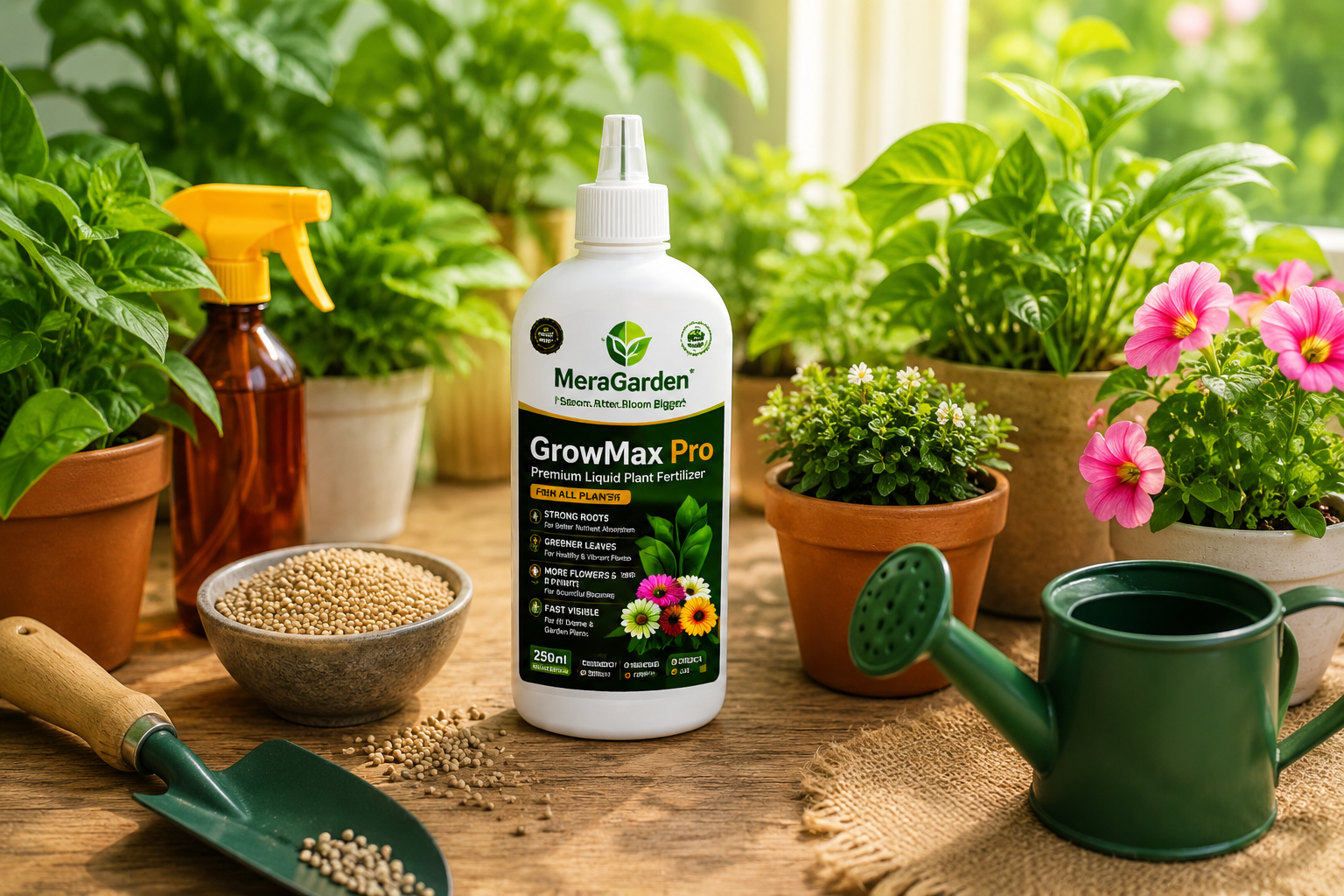
For gardeners looking for a convenient liquid feeding option, MeraGarden GrowMax Pro is a premium liquid plant fertilizer shown on its product packaging as suitable for all plants.
The GrowMax Pro bottle highlights benefits including:
- Strong roots
- Greener leaves
- More flowers and fruits
- Easy application
- Concentrated formula
The product packaging also identifies it as a 250 ml premium liquid plant fertilizer.
As with any concentrated fertilizer, use GrowMax Pro according to the dosage and application instructions supplied with the product.
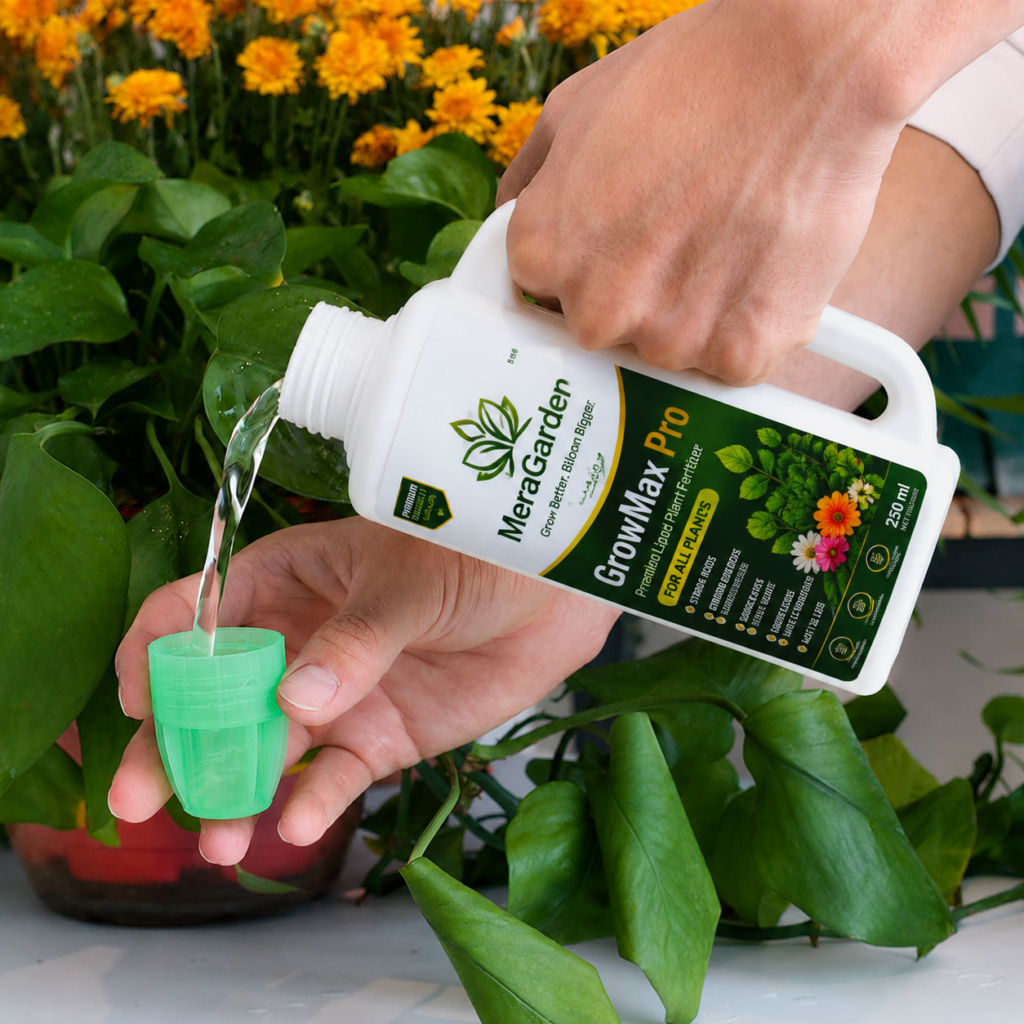
Image placement: GrowMax Pro section में आपकी actual bottle image लगाएँ। Generic AI product image की बजाय आपकी original product image बेहतर रहेगी।
Frequently Asked Questions
How do I use liquid fertilizer for plants?
Read the product label, measure the recommended amount, dilute it correctly if required, and apply it using the recommended method and schedule.
Can I use liquid fertilizer on indoor plants?
Many liquid fertilizers can be used for indoor plants, but always check whether the particular product is suitable for your plant.
How often should I use liquid fertilizer?
Follow the manufacturer’s recommended frequency. The correct interval depends on the fertilizer, plant, growth stage and growing conditions.
Can I use liquid fertilizer after repotting?
Do not assume that every newly repotted plant needs immediate fertilizer. Check the plant’s condition, potting mix and product instructions first.
Can too much liquid fertilizer damage plants?
Yes. Excessive fertilizer can stress plants and may contribute to nutrient or salt-related problems.
Should I fertilize a flowering plant?
Flowering plants can benefit from appropriate nutrition during active growth, but fertilizer is only one part of successful flowering.
Final Thoughts
Learning how to use liquid fertilizer for plants is mainly about using the right product, the right quantity and the right timing.
Choose a fertilizer suitable for your plant, read the label carefully, measure the recommended quantity, dilute it correctly and observe your plant after application.
For Indian home gardeners, seasonal conditions can vary significantly, so avoid using exactly the same fertilizer routine for every plant throughout the year.
If you want a convenient liquid fertilizer for your home garden, MeraGarden GrowMax Pro can be considered as part of a broader plant-care routine.
Recommended Articles
- How Often Should You Fertilize Plants? 7 Easy Rules for Healthy Growth
- How Often Should You Fertilize Plants? Complete Fertilizer Schedule
- What Is NPK Fertilizer? 7 Easy Tips for Healthy Plants
- Best Liquid Fertilizer for Plants: Complete Guide for Home Gardeners
- How to Use Liquid Fertilizer for Plants: 7 Easy Steps for Better Growth
- Best Organic Fertilizers for Plants: 7 Natural Options for Healthy Growth
- Best Fertilizer for Indoor Plants in India: 7 Easy Tips for Healthy Growth
- Best Fertilizer for Flowering Plants in India: 7 Top Options
- Best Fertilizer for Plants: 7 Smart Tips to Avoid Common Mistakes
- 5 Signs Your Plants May Need Fertilizer
- How Much Liquid Fertilizer Should You Use for Plants?
- 7 Benefits of Liquid Fertilizer for Plants: Grow Healthier Plants Faster
- 7 Benefits of Liquid Fertilizer for Plants: A Simple Guide for Healthy Growth
- Best Fertilizer for Peace Lily: 7 Powerful Tips for Beautiful Blooms and Avoiding Common Mistakes
- Best Fertilizer for Spider Plant: 7 Powerful Tips for Lush Growth and Avoiding Common Mistakes
- Liquid Fertilizer vs Granular Fertilizer: Which Is Better? 7 Key Differences for Home Gardeners
- Liquid Fertilizer vs Organic Fertilizer: 7 Powerful Pros, Cons & the Best Choice for Your Plants
- How to Choose the Right Fertilizer for Your Plants: 7 Smart Tips to Avoid Common Mistakes
- 5 Positive Signs Your Plants Need Fertilizer — Avoid These Warning Symptoms for Healthier Growth
- How to Grow Peace Lilies
- How To Grow Houseplants