
Fertilizer provides plants with nutrients that may not always be available in sufficient amounts from soil alone. However, fertilizing too little can slow plant growth, while fertilizing too often can damage roots and cause nutrient buildup in the soil.
So, how often should you fertilize plants?
There is no single schedule that works for every plant. The right frequency depends on the plant type, growing season, soil or potting mix, fertilizer formulation, plant size, and growing conditions.
As a general starting point, actively growing plants may benefit from regular feeding during their growing season, while many plants need much less fertilizer during periods of slow growth or dormancy.
In this guide, we will explain 7 simple rules for fertilizing plants, how often to use liquid fertilizer, when indoor plants need feeding, signs of overfertilization, and how to create a practical fertilizer schedule.
Table of Contents
How Often Should You Fertilize Plants?
The easiest answer is: fertilize according to the plant’s needs and the instructions on your fertilizer label.
For many actively growing plants, feeding every 2–4 weeks can be a reasonable starting range when using a diluted liquid fertilizer. However, this is not a universal rule.
Some plants need more frequent feeding, while others require very little fertilizer.
Before creating a fertilizer schedule, consider:
- Plant type
- Plant age and size
- Growing season
- Soil quality
- Pot size
- Fertilizer concentration
- Watering frequency
- Amount of sunlight
- Whether the plant is actively growing
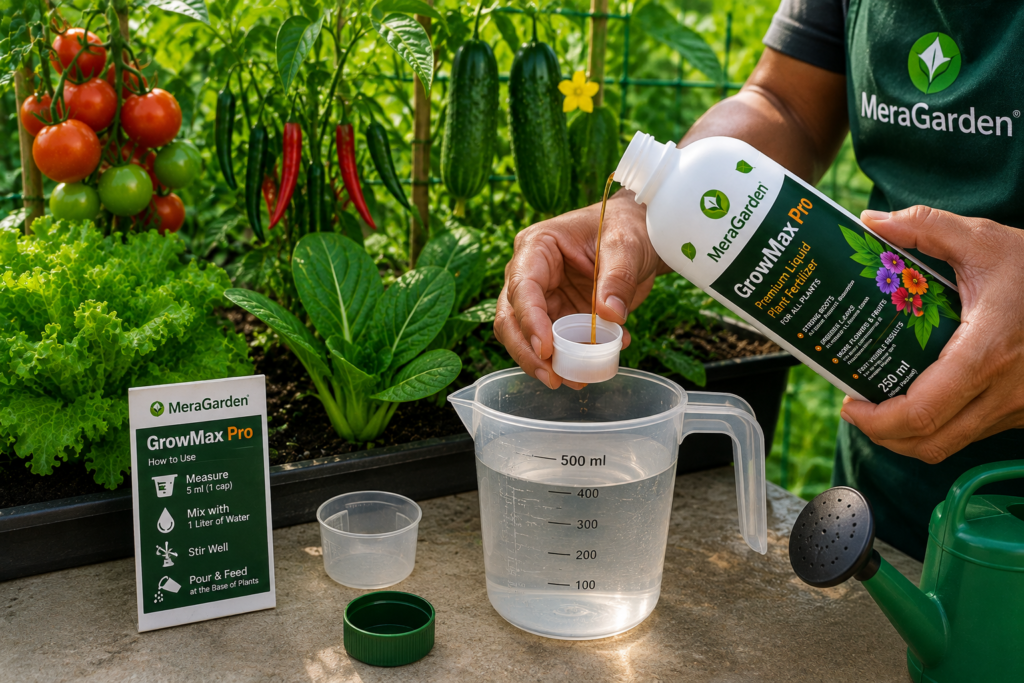
If you are using a concentrated liquid fertilizer such as MeraGarden GrowMax Pro, always follow the dosage and application instructions provided with the product rather than increasing the concentration yourself.
7 Simple Rules for Fertilizing Plants
1. Consider the Plant Type
Different plants have different nutritional requirements.
For example, flowering plants may have different feeding requirements from foliage plants, while vegetables can have different nutrient demands during different stages of growth.
Indoor plants such as:
- Money plant
- Peace lily
- Snake plant
- Spider plant
- ZZ plant
- Philodendron
- Areca palm
may require different fertilizer frequencies depending on their growth rate and growing conditions.
Before choosing a fertilizer schedule, identify the plant and understand its basic requirements.
Tip
Don’t assume that a fertilizer schedule that works well for one plant will automatically work for every plant in your garden.
2. Follow the Growing Season
One of the most important factors affecting fertilizer frequency is whether the plant is actively growing.
During active growth, plants generally use more nutrients because they are producing new leaves, stems, roots, flowers, or fruit.
During slower growth periods, nutrient demand can decrease.
A simple approach is:
Active growth → regular feeding
Slow growth → reduce feeding
Dormancy → little or no feeding, depending on the plant
For many indoor plants, growth can continue for much of the year when they receive suitable light and temperatures. That’s why indoor plants should not automatically be treated exactly like outdoor seasonal plants.
3. Check the Fertilizer Instructions
Every fertilizer is different.
Some products are ready to use, while others are concentrated and must be diluted with water. The nutrient concentration can also vary significantly between products.
Therefore, don’t decide the dosage simply by looking at another fertilizer’s instructions.
Always check:
- Recommended dilution
- Application frequency
- Suitable plants
- Application method
- Storage instructions
- Safety precautions
If the label recommends diluting a concentrated liquid fertilizer, measure the product carefully before mixing it with water.
More fertilizer does not automatically mean faster growth.
4. Start With the Recommended Dose
One common mistake gardeners make is believing that increasing fertilizer concentration will make plants grow faster.
It can have the opposite effect.
Excess fertilizer can increase the concentration of soluble salts around the roots. This may stress the plant and can contribute to symptoms such as leaf-edge damage, wilting, or brown foliage.
For this reason, follow the manufacturer’s recommended dilution rather than making a stronger mixture.
If you are trying a fertilizer on a plant for the first time, carefully observe the plant after application.
Look for:
- New leaf growth
- Leaf color
- Overall vigor
- Flower production
- Signs of leaf-tip burn
- Changes in soil condition
5. Adjust the Schedule for Indoor Plants
Indoor plants often grow more slowly than plants growing outdoors under strong natural light.
Their fertilizer requirements can therefore be different.
A houseplant receiving bright indirect light and actively producing new leaves may need regular feeding during its active growth period.
A plant receiving very low light may grow slowly and may not use nutrients as quickly.
Before increasing fertilizer frequency, check the basics:
Light
Is the plant receiving enough light for its species?
Water
Are you watering too frequently or allowing the soil to become excessively dry?
Soil
Does the potting mix drain properly?
Roots
Is the plant root-bound or suffering from poor drainage?
Fertilizer should support good plant care—it cannot compensate for unsuitable light, watering, or soil conditions.
6. Reduce Feeding During Dormancy
Some plants naturally slow down during particular seasons.
When growth slows significantly, the plant may require less fertilizer.
Continuing a heavy feeding schedule when a plant is barely growing can result in unused nutrients accumulating in the growing medium.
Instead, observe the plant.
If you notice that:
- New growth has stopped
- The plant is naturally dormant
- Temperatures have dropped significantly
- Light levels have decreased
- The plant is under environmental stress
you may need to reduce or pause fertilization depending on the plant species.
7. Watch Your Plant for Signs of Stress
A fertilizer calendar is useful, but your plant itself provides valuable information.
Don’t rely only on a fixed schedule.
After fertilizing, observe the plant over time.
Healthy growth may include:
- New leaves
- Strong stems
- Good leaf color
- Active root development
- New shoots
- Flower or fruit development when appropriate
Possible signs of fertilizer stress can include:
- Brown leaf tips
- Brown or scorched leaf edges
- Wilting despite adequate moisture
- Unusual leaf discoloration
- White crust or buildup on the soil surface
If you notice possible overfertilization, don’t respond by adding even more fertilizer.
How Often Should You Use Liquid Fertilizer?
Liquid fertilizer is popular because it can be diluted and applied relatively easily.
For many actively growing plants, a diluted liquid fertilizer may be used every 2–4 weeks, depending on the product and plant.
However, the exact frequency should come from the fertilizer’s instructions and the plant’s requirements.
For example, you may have:
Week 1: Fertilize
Week 2: Regular watering and observation
Week 3: Fertilize if appropriate
Week 4: Regular care
This is only an example—not a universal schedule.
Always follow the directions on your specific fertilizer.
How Often Should You Fertilize Indoor Plants?
Indoor plants generally need a more careful approach because they grow in containers with a limited amount of growing medium.
A practical approach is to fertilize actively growing indoor plants periodically rather than adding fertilizer every time you water.
For many houseplants, every 2–4 weeks during active growth may be appropriate when using a properly diluted liquid fertilizer.
But slow-growing plants may need less.
Example
A fast-growing money plant in good light may require more regular feeding than a slow-growing snake plant.
This is why plant-specific observation is important.
How Often Should You Fertilize Flowering Plants?
Flowering plants can have increased nutrient requirements during periods of active growth and flowering.
However, fertilizer alone does not guarantee flowers.
Flower production can also depend on:
- Light
- Temperature
- Watering
- Plant maturity
- Pruning
- Pot size
- Growing medium
- Plant variety
Use a fertilizer appropriate for flowering plants and follow its label directions.
Avoid increasing fertilizer concentration simply because you want more flowers.
How Often Should You Fertilize Vegetable Plants?
Vegetable plants can have changing nutritional requirements as they grow.
Young plants, leafy growth, flowering, and fruit development can involve different nutrient demands.
Instead of applying a large amount of fertilizer at once, gardeners should follow the fertilizer label and consider the crop’s growth stage.
Common vegetables grown in home gardens include:
- Tomato
- Chilli
- Brinjal
- Okra
- Cucumber
- Beans
- Spinach
- Coriander
Container vegetables may require particularly careful feeding because the available growing medium is limited.
Signs You Are Fertilizing Too Much
Overfertilization is one of the most common fertilizer-related problems.
Possible signs include:
1. Brown Leaf Tips
Leaf tips may become brown or scorched when the plant is stressed.
2. Leaf-Edge Burn
The edges of leaves may develop brown or dry areas.
3. White Crust on Soil
A white or crusty buildup on the soil surface can sometimes indicate accumulated fertilizer salts.
4. Wilting
A plant can sometimes wilt even when the soil appears moist if its roots are under stress.
5. Poor Growth
Adding more fertilizer does not always improve growth. Excess nutrients can actually create additional stress.
If you suspect overfertilization, stop adding fertilizer and review your watering and growing conditions before feeding again.
Signs Your Plant May Need More Nutrients
Slow growth does not automatically mean a plant needs fertilizer.
However, possible nutrient-related symptoms can include:
- Pale or yellowing leaves
- Slow new growth
- Small new leaves
- Weak overall growth
- Poor flowering
These symptoms can also result from other problems such as:
- Poor light
- Overwatering
- Underwatering
- Root problems
- Pests
- Poor drainage
- Temperature stress
Therefore, diagnose the growing conditions before automatically adding fertilizer.
Can You Fertilize Plants Every Week?
For most home gardeners, weekly fertilization should not be assumed to be safe simply because the fertilizer is liquid.
Some products are specifically formulated for frequent application at very low concentrations, while concentrated fertilizers may require much less frequent application.
Always check the product instructions.
If your fertilizer recommends application every 2–4 weeks, applying it every week can unnecessarily increase nutrient and salt accumulation.
Follow the label rather than creating a stronger or more frequent schedule yourself.
Best Time of Day to Fertilize Plants
There isn’t one universal time that works for every plant and every fertilizer.
For routine plant care, many gardeners prefer applying fertilizer when environmental conditions are moderate rather than during extreme heat.
If applying liquid fertilizer:
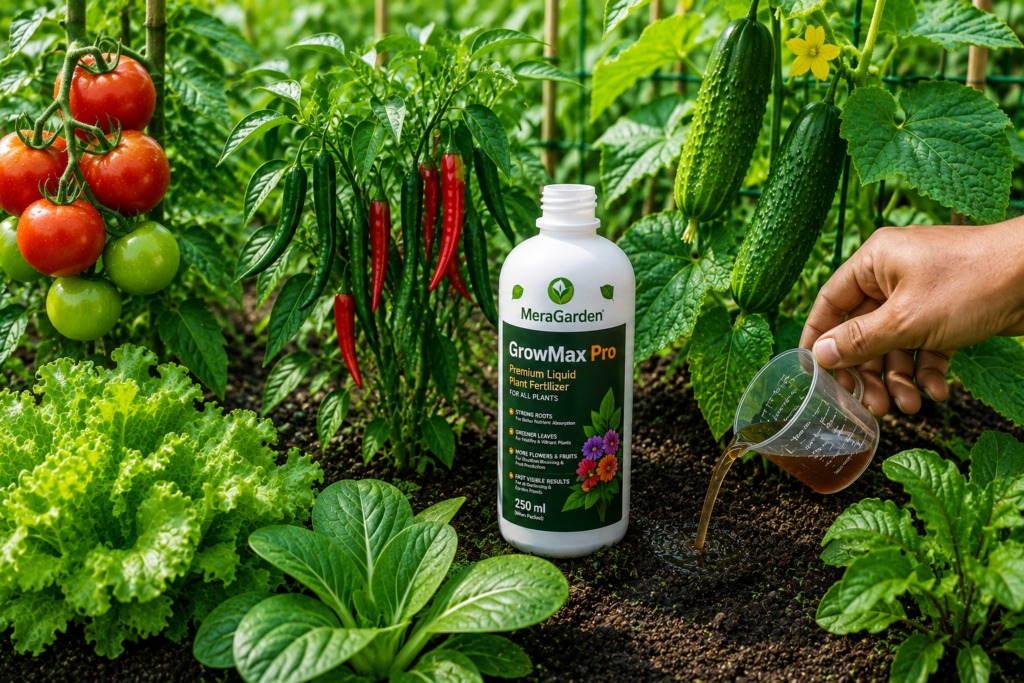
- Prepare the recommended dilution.
- Apply it according to the product instructions.
- Avoid increasing the concentration.
- Keep fertilizer away from areas where it is not intended to be applied.
- Monitor the plant afterward.
For outdoor plants, extremely hot conditions can increase plant stress, so timing should also consider local weather.
MeraGarden GrowMax Pro for Convenient Plant Feeding
If you prefer a convenient liquid fertilizer for your plants, MeraGarden GrowMax Pro can be incorporated into a regular plant-care routine according to its product instructions.
The important thing is not simply how often you fertilize, but how correctly you use the fertilizer.
Before applying GrowMax Pro:
- Read the product label.
- Measure the recommended quantity.
- Dilute it as instructed.
- Apply it to suitable plants.
- Avoid unnecessary overfeeding.
- Observe your plants after application.
A consistent approach combined with suitable light, watering, soil, and general plant care can help create better growing conditions.
Looking for a convenient liquid fertilizer?
MeraGarden GrowMax Pro is designed as a liquid plant nutrition option for gardeners looking for an easy way to incorporate feeding into their plant-care routine.
Simple Plant Fertilizer Schedule
Here is an easy framework you can use as a starting point:
| Plant Situation | General Approach |
|---|---|
| Actively growing indoor plant | Regular feeding according to label |
| Slow-growing indoor plant | Less frequent feeding |
| Flowering plant | Follow flowering-stage fertilizer instructions |
| Vegetable plant | Adjust according to crop and growth stage |
| Newly transplanted plant | Avoid unnecessary immediate heavy feeding |
| Dormant plant | Usually reduce or pause feeding |
| Plant showing fertilizer stress | Stop feeding and assess the cause |
Remember: This is a general guide. The fertilizer manufacturer’s label and the specific plant’s requirements should take priority.
5 Common Fertilizing Mistakes to Avoid
Mistake 1: Using Too Much Fertilizer
More fertilizer doesn’t necessarily mean more growth.
Mistake 2: Fertilizing Every Time You Water
Unless the product specifically recommends this approach, regular fertilizing with every watering can lead to unnecessary nutrient buildup.
Mistake 3: Ignoring the Growing Season
Plants generally have changing nutritional needs as their growth rate changes.
Mistake 4: Fertilizing a Stressed Plant Without Finding the Cause
Yellow leaves or slow growth may be caused by watering, light, pests, or root problems—not necessarily a lack of fertilizer.
Mistake 5: Using Another Product’s Dosage
Different fertilizers have different concentrations. Always follow the instructions for the actual product you’re using.
Frequently Asked Questions
How often should you fertilize plants?
Many actively growing plants can be fertilized every 2–4 weeks when using a properly diluted liquid fertilizer, but the correct frequency depends on the plant and product instructions.
Can I fertilize my plants every week?
Only if the specific fertilizer instructions recommend weekly application at the appropriate dilution. Otherwise, weekly feeding may be excessive.
Should I fertilize indoor plants?
Yes, many indoor plants benefit from fertilizer during active growth, but the amount and frequency depend on the plant and growing conditions.
Should I fertilize plants in winter?
Some plants slow down during winter and need less fertilizer. Indoor plants kept in warm, bright conditions may continue growing, so their needs can differ.
What happens if you use too much fertilizer?
Excess fertilizer can contribute to salt buildup and root stress and may cause symptoms such as brown leaf tips, scorched edges, or poor growth.
Is liquid fertilizer better than granular fertilizer?
Neither is automatically better for every situation. Liquid fertilizers can be convenient because they can be diluted and applied easily, while granular fertilizers can provide nutrients differently. Choose according to the plant and your gardening method.
How do I know when my plant needs fertilizer?
Look at the plant’s growth, growing conditions, soil, and the fertilizer schedule recommended for that plant. Nutrient deficiency symptoms can overlap with other plant problems, so don’t fertilize automatically whenever leaves turn yellow.
Final Thoughts
So, how often should you fertilize plants?
The answer depends on the plant, fertilizer, growing season, and growing conditions.
For many actively growing plants, a diluted liquid fertilizer applied every 2–4 weeks can be a reasonable starting point, but you should always follow the specific product instructions.
The most important rules are simple:
- Know your plant.
- Follow the fertilizer label.
- Don’t overfertilize.
- Adjust feeding during periods of slow growth.
- Pay attention to your plant’s response.
- Maintain good light, watering, soil, and drainage.
- Use a consistent feeding routine.
When you combine appropriate nutrition with good everyday plant care, you give your plants a much better foundation for healthy, steady growth.
Recommended Articles
- How Often Should You Fertilize Plants? 7 Easy Rules for Healthy Growth
- How Often Should You Fertilize Plants? Complete Fertilizer Schedule
- What Is NPK Fertilizer? 7 Easy Tips for Healthy Plants
- Best Liquid Fertilizer for Plants: Complete Guide for Home Gardeners
- How to Use Liquid Fertilizer for Plants: 7 Easy Steps for Better Growth
- Best Organic Fertilizers for Plants: 7 Natural Options for Healthy Growth
- Best Fertilizer for Indoor Plants in India: 7 Easy Tips for Healthy Growth
- Best Fertilizer for Flowering Plants in India: 7 Top Options
- Best Fertilizer for Plants: 7 Smart Tips to Avoid Common Mistakes
- 5 Signs Your Plants May Need Fertilizer
- How Much Liquid Fertilizer Should You Use for Plants?
- 7 Benefits of Liquid Fertilizer for Plants: Grow Healthier Plants Faster
- 7 Benefits of Liquid Fertilizer for Plants: A Simple Guide for Healthy Growth
- Best Fertilizer for Peace Lily: 7 Powerful Tips for Beautiful Blooms and Avoiding Common Mistakes
- Best Fertilizer for Spider Plant: 7 Powerful Tips for Lush Growth and Avoiding Common Mistakes
- Liquid Fertilizer vs Granular Fertilizer: Which Is Better? 7 Key Differences for Home Gardeners
- Liquid Fertilizer vs Organic Fertilizer: 7 Powerful Pros, Cons & the Best Choice for Your Plants
- How to Choose the Right Fertilizer for Your Plants: 7 Smart Tips to Avoid Common Mistakes
- 5 Positive Signs Your Plants Need Fertilizer — Avoid These Warning Symptoms for Healthier Growth
- How to Grow Peace Lilies
- How To Grow Houseplants